Best Solar Inverters for Home in India 2026
The demand for solar inverters for homes in India is growing as more households look for ways to reduce electricity bills and make better use of rooftop solar power. But installing solar panels is only part of the equation. The inverter is the component that converts the electricity generated by solar panels into usable power for household appliances.
Choosing the best solar inverter for home in India 2026 therefore requires more than comparing prices. Homeowners need to consider system size, battery requirements, grid connectivity, efficiency, warranty, monitoring features and after-sales service.
Current 2026 market guides show residential solar inverter prices can vary substantially depending on inverter type and capacity. A typical 3–5kW residential system can range from relatively affordable on-grid options to considerably more expensive hybrid systems with battery support.
So, which solar inverter should you choose? Let’s understand the major types and the features that matter.
What Is a Solar Inverter?
A solar inverter is an essential part of a rooftop solar power system.
Solar panels generate DC electricity, while most household appliances use AC electricity. The inverter converts the DC electricity generated by the panels into AC electricity that can be used by appliances.
Depending on the system design, an inverter can also:
- Monitor solar generation
- Synchronise with the electricity grid
- Charge batteries
- Supply backup power
- Track solar production
- Protect the system from electrical faults
In simple terms, solar panels produce the electricity, while the inverter helps make that electricity usable.
Types of Solar Inverters for Home
Before choosing a brand, you need to select the right inverter type.
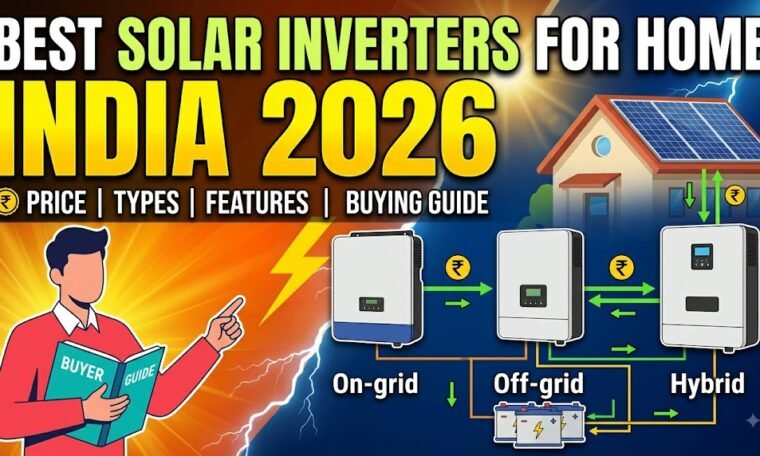
There are three major categories.
1. On-Grid Solar Inverter
An on-grid inverter is connected to the electricity grid.
It converts solar electricity for household use and can send surplus electricity to the grid under applicable net-metering arrangements.
Best For
- Homes with reliable grid electricity
- Rooftop solar systems
- Households primarily looking to reduce electricity bills
- Users who don’t necessarily need battery backup
One important limitation is that a standard grid-tied system generally shuts down during a grid outage for safety reasons.
2. Off-Grid Solar Inverter
An off-grid inverter works independently of the utility grid and normally requires battery storage.
It can be useful in locations where grid electricity is unreliable or unavailable.
Best For
- Rural properties
- Homes with frequent outages
- Areas without reliable grid access
- Independent solar power systems
The major advantage is energy independence, but batteries increase the overall system cost.
3. Hybrid Solar Inverter
A hybrid inverter combines solar generation, grid electricity and battery storage.
It can intelligently manage energy from different sources depending on the system configuration.
Best For
- Homes wanting solar plus backup
- Areas with frequent power cuts
- Users interested in battery storage
- Households wanting greater energy flexibility
Hybrid systems generally cost more than basic on-grid systems because of their additional functionality and battery compatibility. Current market guides place residential hybrid inverter pricing substantially above entry-level grid-tied units.
4. Luminous Solar Inverters

Luminous is one of the familiar names in India’s inverter and power-backup market.
The company’s solar range includes on-grid and off-grid products designed for residential applications. Industry listings place Luminous among the major solar inverter manufacturers serving the Indian market.
A current listing for a Luminous 5kW single-phase MPPT on-grid inverter is around ₹34,699, although prices can vary between sellers.
Why Consider Luminous?
- Established Indian brand
- Wide product range
- Residential solar options
- On-grid and off-grid solutions
- Availability through multiple dealers
Luminous can be particularly attractive to homeowners who prioritise brand familiarity and service availability.
5. Microtek Solar Inverters

Microtek is another established name in India’s power-backup market.
Its solar portfolio includes grid-tied and other solar power solutions.
A current market listing shows a Microtek 5kW grid-tied solar inverter at approximately ₹30,990, while another listing places a 5kW Microtek on-grid unit around ₹40,200. Prices vary by seller and configuration.
Microtek’s own 2026 guide notes that small solar inverters can start around ₹20,000–₹40,000, while mid-range products can fall around ₹30,000–₹60,000 depending on capacity and features.
Best For
Homeowners looking for:
- Residential solar systems
- Grid-connected installations
- Established inverter brands
- Different capacity choices
6. Growatt Solar Inverters
Growatt is another major name in the solar inverter market, particularly for residential and small commercial systems.
Industry sources highlight Growatt’s combination of efficiency and relatively competitive pricing, especially in the 3–10kW segment.
Why Consider Growatt?
- Residential-focused products
- On-grid options
- Hybrid solutions
- Digital monitoring
- Multiple capacity choices
Growatt can be interesting for homeowners who want a modern solar system with monitoring and smart energy-management features.
7. Sungrow Solar Inverters
Sungrow is a major global solar inverter manufacturer with products across residential, commercial and utility-scale applications.
For homeowners, the key attraction is the company’s technology portfolio and range of inverter solutions.
Potential Advantages
- Advanced inverter technology
- Residential solutions
- Strong global presence
- Monitoring capabilities
- Different system capacities
Sungrow is often positioned toward buyers who are willing to consider established international solar technology rather than focusing solely on the lowest purchase price.
8. Solis Solar Inverters
Solis is another brand frequently featured in India’s solar inverter market.
The brand offers string and other inverter solutions across different capacities.
For residential users, the important considerations include:
- System compatibility
- Efficiency
- Monitoring
- Warranty
- Local service support
- Installation quality
The inverter should always be selected as part of the complete solar system rather than as an isolated product.
How Much Does a Solar Inverter Cost in India in 2026?
There is no single solar inverter price because capacity and technology make a major difference.
Indicative 2026 market ranges include:
| Inverter Type | Approximate Price Range |
|---|---|
| 1kW On-Grid | ₹8,000+ |
| 3kW Residential On-Grid | ₹15,000–₹35,000+ |
| 5kW On-Grid | ₹17,000–₹40,000+ |
| 3–5kW Hybrid | ₹25,000–₹60,000+ |
| Off-Grid | ₹15,000–₹1 lakh+ |
| Larger Systems | ₹60,000+ |
These are indicative market ranges, not fixed retail prices. Capacity, brand, installation requirements, warranty and battery compatibility can significantly change the final price.
How Many kW Solar Inverter Does Your Home Need?
Choosing the correct capacity is one of the most important decisions.
A small apartment with moderate electricity usage may need a smaller solar system.
A large house running multiple ACs, refrigerators, pumps and other appliances may require a significantly larger system.
Common residential system sizes include:
- 2kW: Smaller households
- 3kW: Medium electricity users
- 5kW: Larger homes and higher consumption
- 6kW+: High electricity usage
However, don’t select an inverter simply because you have a large house.
Your monthly electricity consumption and solar-panel capacity should guide the system design.
3kW vs 5kW Solar Inverter
If you’re deciding between a 3kW and 5kW inverter, examine your actual electricity usage.
3kW Solar Inverter
Suitable for households with moderate consumption.
It can be a good starting point for homeowners wanting rooftop solar without a very large system.
5kW Solar Inverter
Better suited to larger solar installations and households with greater electricity requirements.
A 5kW system can make more sense if your home has substantial daytime electricity consumption.
The best approach is to have a qualified installer calculate the required capacity based on your load profile.
Important Features to Look For
Don’t choose an inverter based only on brand or price.
MPPT Technology
Maximum Power Point Tracking helps the inverter extract available energy efficiently from solar panels.
High Conversion Efficiency
Higher efficiency means less energy is lost during conversion.
Monitoring
Wi-Fi or app-based monitoring can allow homeowners to check:
- Solar generation
- Daily production
- Energy consumption
- Grid usage
- System alerts
Protection Features
Look for protection against:
- Overvoltage
- Overcurrent
- Short circuits
- Overheating
- Grid abnormalities
Warranty
A longer and clearly defined warranty can provide greater peace of mind.
On-Grid vs Hybrid: Which Is Better?
If your primary objective is to reduce your electricity bill, an on-grid solar inverter can be a practical choice.
If your priority is backup during power cuts, a hybrid inverter with battery storage may be more appropriate.
Choose On-Grid If:
- Grid supply is reliable
- You want lower installation costs
- You mainly want to reduce your electricity bill
Choose Hybrid If:
- Power cuts are common
- You want battery backup
- You want more control over solar energy
- You are planning future battery storage
There isn’t a universally better option. The right choice depends on your home’s electricity situation.
Does a Solar Inverter Reduce Electricity Bills?
The inverter itself doesn’t magically reduce electricity consumption.
Instead, the solar system generates electricity from sunlight, which can reduce the amount of electricity your home needs to purchase from the grid.
Savings depend on:
- Solar-panel capacity
- Daily sunlight
- Household consumption
- Electricity tariff
- Net-metering rules
- System efficiency
- Installation quality
Homes that consume significant electricity during daylight hours can potentially make particularly good use of rooftop solar generation.
Battery or No Battery: What Should You Choose?
This depends on your goals.
Without Battery
An on-grid system can be cheaper and simpler.
You use solar power when available and interact with the grid according to the applicable system arrangement.
With Battery
A battery can store excess solar electricity for later use.
This is useful when:
- Power cuts are frequent
- You want evening backup
- Grid reliability is poor
- Energy independence is important
However, batteries add cost and eventually need replacement.
Installation Matters as Much as the Inverter
Even the best solar inverter can perform poorly if the overall installation is badly designed.
Make sure the installer checks:
- Panel orientation
- Shading
- Cable sizing
- Earthing
- Surge protection
- Inverter ventilation
- Grid connection
- Structural safety
- Correct system sizing
A professional site assessment can prevent expensive mistakes.
Common Mistakes to Avoid
Buying Only on Price
The cheapest inverter isn’t necessarily the most economical over its entire lifespan.
Ignoring Warranty
Always understand warranty terms.
Choosing the Wrong Capacity
Oversizing or undersizing can affect system performance and cost.
Ignoring Service Support
A local service network can be valuable if something goes wrong.
Forgetting Battery Costs
Hybrid and off-grid systems can become significantly more expensive once batteries are included.
Not Checking Compatibility
The inverter must be compatible with your solar panels, grid configuration and other system components.
Final Verdict
The best solar inverter for home in India 2026 depends on what you want from your rooftop solar system.
For homeowners primarily looking to reduce electricity bills, an on-grid inverter can be a cost-effective option. If backup power is important, a hybrid solar inverter with battery compatibility may be more suitable. Off-grid systems make more sense for locations where reliable grid electricity isn’t available.
Brands such as Luminous, Microtek, Growatt, Sungrow and Solis offer options across different residential requirements, but the brand alone shouldn’t determine your decision.
Before purchasing, compare capacity, MPPT technology, efficiency, warranty, monitoring, protection features, battery compatibility and after-sales service.
Most importantly, size the complete solar system correctly. A well-designed combination of solar panels + inverter + battery, where required + proper installation will generally matter more than simply buying the most expensive inverter.