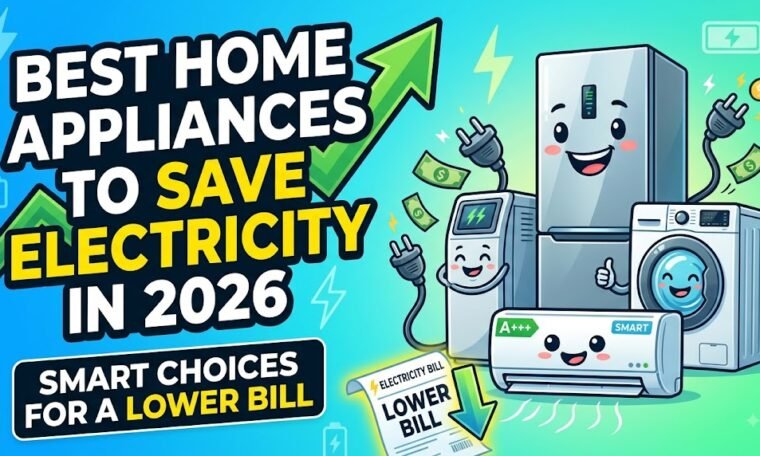
Best Home Appliances to Save Electricity in 2026
With electricity bills becoming an important part of household budgets, choosing the best home appliances to save electricity in 2026 can make a meaningful difference to monthly expenses. From air conditioners and refrigerators to washing machines, fans and televisions, the appliances you use every day can have a major impact on overall household energy consumption.
The good news is that modern appliances are becoming increasingly energy efficient. In India, the Bureau of Energy Efficiency (BEE) uses the Star Rating system to help consumers compare the energy performance of many appliances. The label provides information such as electricity consumption and efficiency, making it easier to make informed purchasing decisions.
However, buying a 5-star appliance doesn’t automatically guarantee a low electricity bill. Usage habits, appliance size, temperature settings, maintenance and operating hours also matter.
So, which appliances should you consider if your goal is to reduce electricity consumption in 2026?
Why Energy-Efficient Appliances Matter
An appliance may cost more initially but consume less electricity over its lifetime.
Think of it as paying a little more upfront to potentially save repeatedly over several years.
For appliances that run for many hours every day—especially air conditioners, refrigerators and fans—even relatively small efficiency improvements can add up.
When shopping, therefore, don’t look only at the purchase price.
Consider:
- Energy rating
- Annual electricity consumption
- Appliance capacity
- Expected operating hours
- Maintenance requirements
- Warranty
- Long-term running cost
1. 5-Star Inverter Air Conditioner
An air conditioner can be one of the biggest electricity consumers in an Indian household, particularly during hot weather.
If you’re buying an AC in 2026, an energy-efficient inverter AC can be worth considering.
Unlike conventional fixed-speed compressors, inverter technology can adjust compressor operation according to cooling demand.
Why Choose an Energy-Efficient AC?
- Potentially lower electricity consumption
- More consistent cooling
- Variable-speed compressor operation
- Better temperature control
- Suitable for long operating hours
However, don’t automatically choose the largest AC.
An oversized AC can be inefficient, while an undersized model may have to work harder.
Choose the capacity according to your room size, insulation, sunlight exposure and local climate.
2. Energy-Efficient Refrigerator
A refrigerator runs continuously, making it one of the most important appliances to consider when trying to save electricity.
A BEE-rated refrigerator with efficient technology can help control long-term energy consumption.
Modern refrigerators may also feature:
- Inverter compressors
- Digital temperature controls
- Frost-free technology
- Energy-saving modes
- Improved insulation
Simple Refrigerator Energy-Saving Tips
Don’t repeatedly open the door unnecessarily.
Avoid putting extremely hot food directly inside.
Keep the refrigerator away from direct sunlight and heat-producing appliances.
Also make sure the door seal is functioning correctly.
3. BLDC Ceiling Fans
Ceiling fans operate for several hours in many Indian homes.
That’s why switching to BLDC fans can be an effective electricity-saving upgrade.
BLDC stands for Brushless Direct Current.
These fans are designed to consume considerably less electricity than many traditional induction-motor fans.
Benefits of BLDC Fans
- Lower power consumption
- Efficient motor technology
- Remote-control options on many models
- Better performance at lower power
- Useful for bedrooms and living rooms
If your home has multiple fans running for several hours every day, replacing older models gradually can potentially reduce consumption.
4. Energy-Efficient Washing Machine
Washing machines don’t necessarily consume as much electricity as air conditioners, but efficiency still matters.
When purchasing a washing machine, look at both electricity and water consumption.
Front-load models are often designed for efficient water usage and can provide effective washing with appropriate programmes.
Look For
- High energy rating
- Eco wash programmes
- Variable temperature settings
- Appropriate capacity
- Efficient spin cycles
Avoid running a large machine for tiny loads whenever possible.
5. Inverter Microwave Oven
Microwave ovens are generally used for relatively short periods.
Still, inverter technology can provide more controlled power delivery in some models.
If you regularly use a microwave for cooking or reheating, consider models with energy-saving functions and appropriate capacity.
Don’t buy a significantly larger appliance than your household actually needs.
6. LED Smart Television
Modern LED TVs are generally much more energy efficient than older television technologies.
If you’re replacing an old TV, an energy-efficient LED model can help reduce power consumption.
However, bigger screens generally consume more electricity than smaller screens.
So, choosing a massive television when you mainly watch from a small room may not be the most energy-efficient decision.
TV Energy-Saving Tips
Turn the TV off instead of leaving it running unnecessarily.
Reduce excessive brightness.
Use automatic power-saving settings where available.
7. Energy-Efficient Water Heater
Water heaters can consume significant electricity, particularly in households where hot water is used frequently.
When purchasing a geyser, consider:
- Star rating
- Tank insulation
- Capacity
- Temperature control
- Timer functionality
- Usage patterns
A timer or smart control can help prevent unnecessary heating.
There’s little reason to keep heating water continuously when nobody needs it.
8. Induction Cooktop
Induction cooking can be an efficient option for certain cooking tasks because electromagnetic energy directly heats compatible cookware.
Its efficiency depends on the cooking method, appliance quality and electricity source.
Advantages
- Fast heating
- Precise temperature control
- Easy cleaning
- Heat concentrated in cookware
- Useful for controlled cooking
However, make sure your cookware is compatible with induction technology.
9. Energy-Efficient Air Cooler
For areas where air coolers work effectively, they can consume less electricity than air conditioners.
Their effectiveness depends heavily on the local climate.
Air coolers generally work best in relatively dry conditions.
In very humid weather, their cooling performance may be less effective.
Therefore, compare your climate and usage pattern before replacing an AC with an air cooler.
10. Smart Plugs and Smart Power Strips
Some household electronics continue drawing small amounts of electricity while on standby.
Smart plugs and power strips can help you control appliances more easily.
They are particularly useful for:
- TVs
- Gaming systems
- Computers
- Entertainment systems
- Chargers
- Home-office equipment
You can turn connected devices off when they’re not required.
BEE Star Rating: What Does It Mean?
The BEE Star Rating is one of the most useful tools for Indian consumers comparing appliance efficiency.
The scale generally ranges from lower efficiency ratings to 5-star, with higher ratings indicating better energy efficiency within the applicable product category.
However, compare the actual energy consumption shown on the label too.
A larger 5-star appliance can still consume more electricity than a smaller appliance because of its size and capacity.
That’s why star rating + electricity consumption + usage pattern should be considered together.
Which Appliances Consume the Most Electricity?
The answer depends on household habits, but appliances that typically deserve close attention include:
Air Conditioner
High usage during summer can significantly increase electricity consumption.
Water Heater
Frequent heating can increase energy use.
Refrigerator
It operates throughout the day.
Fans
Multiple fans operating for many hours can contribute to total consumption.
Washing Machine
Frequent hot-water washing can increase electricity consumption.
Electric Oven
High-temperature cooking can require substantial power.
How to Reduce Electricity Consumption at Home
Buying efficient appliances is only half the solution.
Your habits matter too.
Use the Correct Appliance Size
Don’t buy a huge appliance for a small household.
Maintain Your Appliances
Dirty AC filters, poor refrigerator seals and neglected equipment can reduce efficiency.
Avoid Unnecessary Standby Power
Switch off electronics when they’re not being used.
Use Eco Modes
Many modern appliances include energy-saving programmes.
Don’t Overload Appliances
Follow the manufacturer’s recommended capacity.
Use AC at a Reasonable Temperature
Extremely low thermostat settings can increase electricity consumption.
Use Natural Light
Switch off lights during the day whenever possible.
Replace Old Appliances Gradually
You don’t need to replace everything at once.
Start with appliances that consume the most electricity.
How to Calculate Appliance Electricity Consumption
A simple formula can help estimate electricity use:
Electricity consumed = Power rating × Usage time
For example, if an appliance uses 1,000 watts (1kW) and operates for 3 hours:
1kW × 3 hours = 3kWh
Your electricity bill depends on your local tariff and other charges.
Actual consumption can vary because some appliances don’t operate at maximum power continuously.
An inverter AC, for example, can adjust its power consumption based on cooling demand.
Should You Buy 5-Star Appliances?
In many cases, yes—but compare the numbers.
A 5-star appliance can be a smart choice when you use it frequently for several years.
However, if an efficient model costs substantially more than a lower-rated model, calculate the potential electricity savings before purchasing.
For appliances that operate daily for long hours, the efficiency difference can be more meaningful.
Best Appliances to Prioritize for Electricity Savings
If your budget is limited, start with appliances that consume the most electricity.
A practical priority list could be:
1. Air conditioner
2. Refrigerator
3. Water heater
4. Ceiling fans
5. Washing machine
6. Television and entertainment equipment
7. Kitchen appliances
This doesn’t mean every home will follow the same order.
Your actual usage should determine where you focus first.
Frequently Asked Questions
Which home appliance uses the most electricity?
In many households, air conditioners can consume significant amounts of electricity, particularly when operated for long periods. Water heaters and other high-power appliances can also contribute substantially.
Are 5-star appliances worth buying?
They can be, particularly for appliances used frequently over several years. Always compare the actual energy-consumption figures and purchase price.
Do BLDC fans save electricity?
BLDC fans are designed to consume less electricity than many conventional fans, making them an attractive option for households where fans operate for long periods.
Does an inverter AC save electricity?
An inverter AC can reduce energy consumption compared with conventional fixed-speed systems under suitable operating conditions, especially when used for extended periods.
How can I reduce my electricity bill without buying new appliances?
Use appliances efficiently, maintain them properly, avoid unnecessary standby consumption, use eco modes and switch off equipment when not required.
Final Verdict
Choosing the best home appliances to save electricity in 2026 isn’t simply about buying the most expensive or highest-rated product. The smarter strategy is to identify the appliances that consume the most electricity in your household and replace them with appropriately sized, energy-efficient alternatives.
An efficient inverter AC, energy-saving refrigerator, BLDC fan, efficient washing machine, smart water heater and LED television can all contribute to a more energy-conscious home.
But remember: your habits are just as important as the appliance itself.
Use appliances only when necessary, maintain them regularly, choose suitable temperatures and capacities, and pay attention to the energy information provided on the BEE label.